 Skip to content

The Myth of Feeling Ready: Why Fear of Change Keeps Us Stuck
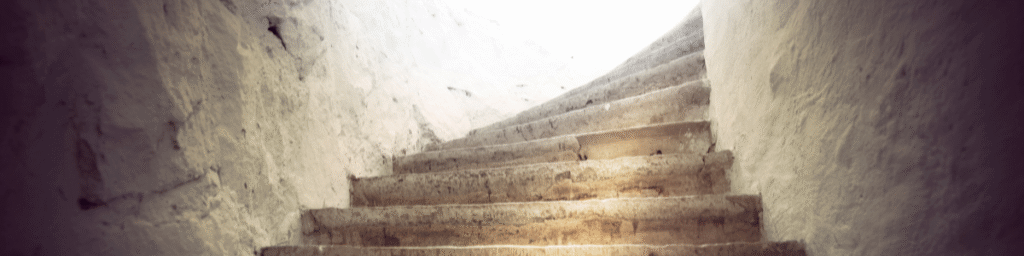
There is a particular feeling many of us wait for before making a change. A sense of readiness. Confidence. Certainty. That internal green light that says, “Yes. Now. This is the moment.” Beneath that waiting, though, is often something else entirely. Fear of change, quietly convincing us that staying where we are is safer than stepping into the unknown.
And if we are honest, that feeling rarely arrives on schedule.
Whether it is starting something new, ending something old, changing direction, or stepping into a different version of ourselves, we often delay because we do not feel ready yet. We assume readiness should come first and action should follow. That belief is deeply ingrained, culturally reinforced, and entirely understandable.
It is also not how the brain works.
Why the brain loves the idea of readiness
From a neurological perspective, the brain’s primary job is not growth or happiness. It is safety. The unknown is metabolically expensive and unpredictable, so the nervous system tends to interpret unfamiliar situations as potential threats. Waiting until you feel ready is often the brain’s way of saying, “Let’s stay where we are. We know how to survive here.”
This is not weakness or procrastination. It is physiology.
When you contemplate a change, the amygdala scans for risk. The body responds with subtle stress signals. Heart rate shifts. Muscles tense. Thought patterns narrow. In that state, readiness feels impossible because the system is already primed for caution.
So the brain tells a convincing story.
Once I feel more confident, I will act.
Once I feel less afraid, I will move.
Once I feel ready, then I will step forward.
The problem is that readiness is not a prerequisite. It is a byproduct.

Confidence does not come before action
Neuroscience shows us that confidence is built through evidence. The brain updates its predictions based on experience, not intention. When you take a small action, the nervous system gathers data. You did not die. You coped. You adapted. You survived.
That information matters more than reassurance or positive thinking.
Each small step creates what psychologists call safety signals. These signals calm the nervous system and widen cognitive flexibility. Over time, the body learns that change is tolerable. Then, and only then, does confidence begin to emerge.
This is why so many people report feeling more capable after they begin, not before. Readiness arrives mid-movement.
The lived experience of waiting
Most of us can think of something we waited too long to start. A conversation we rehearsed endlessly. A change we circled for months. A step we delayed because we were waiting to feel braver, calmer, or more certain.
And if we look closely, we often realise something uncomfortable. The moment we finally acted, the readiness we had been waiting for appeared after the fact. Not all at once, but gradually, as the body adjusted to the new reality.
The fear did not vanish. It just stopped running the show.
Threshold moments feel uncomfortable by design
There is a reason this myth becomes especially loud at times of transition. Endings and beginnings place us in liminal space. The old has loosened, but the new is not yet solid. The nervous system dislikes this in-between state because it removes predictability.
But thresholds are not meant to feel comfortable. They are meant to feel unfamiliar.
If you are waiting to feel ready before stepping into a new chapter, you may be mistaking discomfort for incapacity. Often, it is simply the sensation of crossing from what is known into what is not.

What to do instead of waiting for readiness
Rather than asking, “Do I feel ready?” a more helpful question is, “What is one small step my nervous system could tolerate?”
Not a leap. Not a reinvention. A step.
Small actions reduce threat. They allow the body to recalibrate. They create momentum without overwhelming the system. Over time, readiness grows organically, because the brain now has evidence that movement is survivable.
This is not about forcing yourself forward. It is about working with your physiology rather than arguing with it.
The myth, gently dismantled
You do not need to feel ready to take the next step.
You need to take a step in order to feel ready.
Readiness is not the doorway. It is what develops once you are already walking.
And if you are standing at a threshold right now, feeling unsure, hesitant, or quietly resistant, that does not mean you are doing it wrong. It means you are human. The nervous system is simply doing what it evolved to do.
You are allowed to begin without certainty.
You are allowed to move without confidence.
You are allowed to let readiness catch up with you.