|
'TOOLBELT FOR LIFE' EDITION
|
| | |
|
Happy New Year.
As this is our first Toolbelt for Life newsletter of the year, we wanted to begin by acknowledging the moment, without buying into the pressure that often comes with it. January can feel like a threshold, but not because anything about you suddenly needs fixing or reinventing.
This year, we’re choosing a different starting point.
Not for becoming someone new.
It is for deciding what no longer gets access to you.
So much of the noise around New Year encourages addition. More habits. More goals. More effort. But before anything meaningful can change, there’s a quieter, more powerful step. Clarifying your boundaries. Not as rigid rules, but as living agreements with yourself that reflect who you are now, not who you had to be before.
This month’s theme, Why Boundaries Come Before Breakthroughs, is an invitation to begin the year with curiosity rather than pressure. To notice what drains, overrides, or no longer fits. And to trust that what you choose to protect creates the conditions for whatever comes next. |
| | |
|
In Alchemist's Alcove, we delve into the world of our founding alchemists, exploring their personal journeys, passions, and unique approaches to transformation. Discover the tools, modalities, and insights that shape their practice and inspire change. |
| | |
 |
|
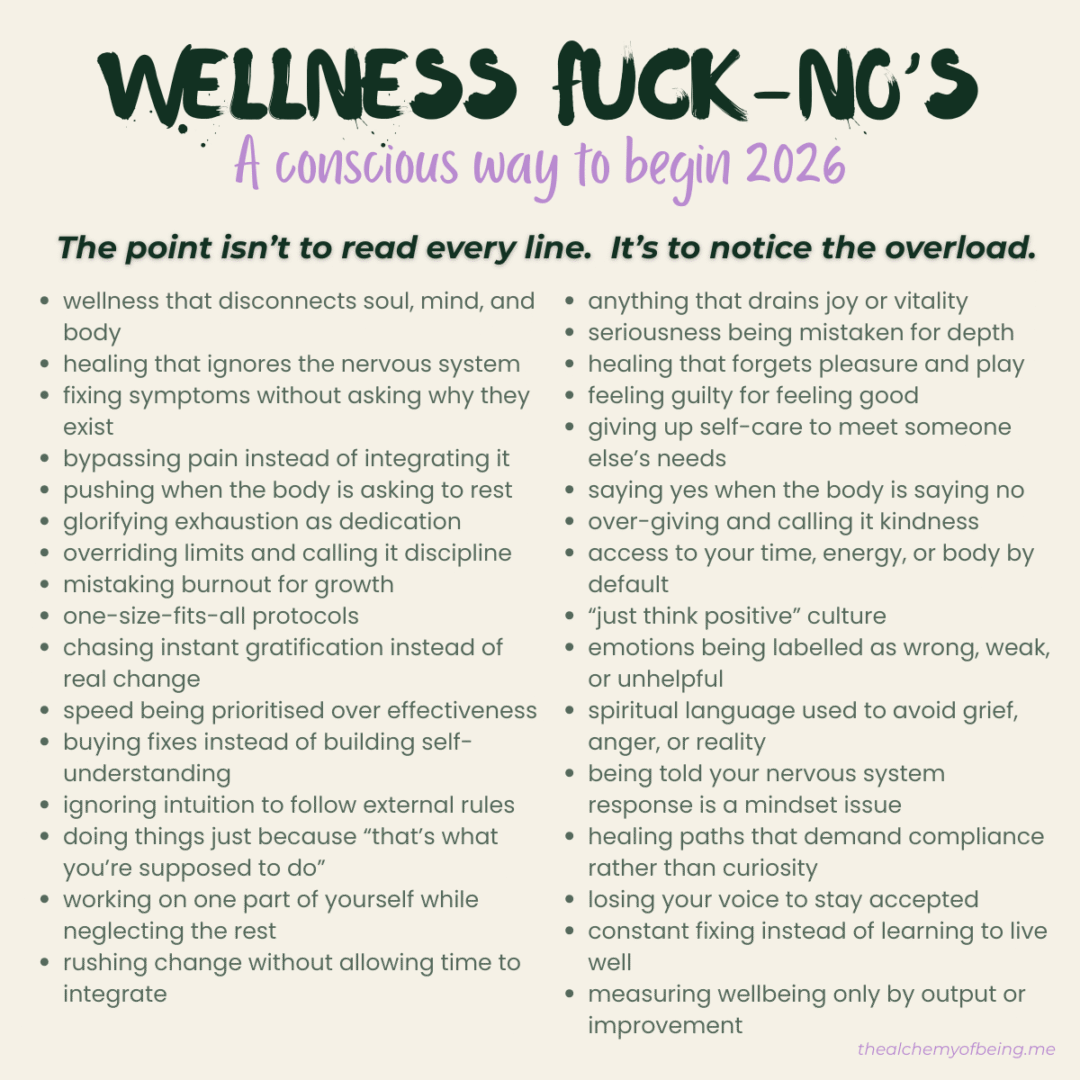
The Wellness Fuck-No’s |
|
Earlier this month, we came across a post by nervous system coach Sarai Speer that invited people to name their “fuck-no’s”. Not their goals. Not their intentions. Just the things their system knew, clearly and instinctively, no longer belonged.
It stopped us in our tracks.
At the start of a new year, we’re usually encouraged to add. More habits. More protocols. More effort. But this felt like a different kind of beginning. One rooted in discernment rather than ambition.
So we created our own version.
The Alchemy of Being edition.
Not as a rejection of wellness, but as a conscious opting out of narratives that quietly override the body, flatten individuality, or mistake endurance for growth. Things like pushing when the body is asking to rest. Treating nervous system responses as mindset problems. Rushing change without allowing time to integrate. Giving up self-care to meet someone else’s expectations.
What struck us most wasn’t the list itself, but the response. People didn’t experience this as negativity or rebellion. They experienced relief. Permission. A sense of coming home to themselves.
Because what we say no to shapes our nervous system, our boundaries, and our capacity for joy just as much as what we say yes to. Sometimes the most supportive thing we can do at the start of a new phase is stop carrying what never really fit.
|
|
|
| | |
|
If you’re curious, you can explore:
Sarai Speer’s original post that inspired this reflection
Our Wellness Fuck-No’s, shared on LinkedIn and Facebook
They’re not meant to be read line by line. They’re an invitation to notice the overload, and decide, consciously, what you’re ready to put down. |
| |
|
In Practice Prompt, we offer a bite-sized ritual or reflective question to bring the theme of the month into your daily rhythm. These simple yet powerful nudges are designed to help you pause, recalibrate, and listen to the quiet wisdom within. Because real change starts with one intentional breath. |
| | |
|
Boundaries don’t always announce themselves as clear thoughts or decisions. Often, they show up first as sensations in the body, a tightening, a heaviness, a quiet pull back. This micro-practice is a way to pause and listen before you override yourself.
You can use it anytime you’re unsure, feeling stretched, or about to say yes out of habit rather than choice.
Place one hand on your chest and one on your belly.
Take a slow breath.
Then gently ask yourself:
Does this feel like a yes, a no, or a not now?
There’s no need to analyse the answer. Simply notice what arises. This isn’t about doing it perfectly or every time. It’s about creating a small moment of self-trust.
Keep it light. Keep it doable. Keep it regulating. |
| |
|
In Modality Moments, we introduce you to a unique modality each week, sharing its significance, why it’s worth exploring in our Wellness Wiki, and a personal insight to inspire your journey. |
| | |
|
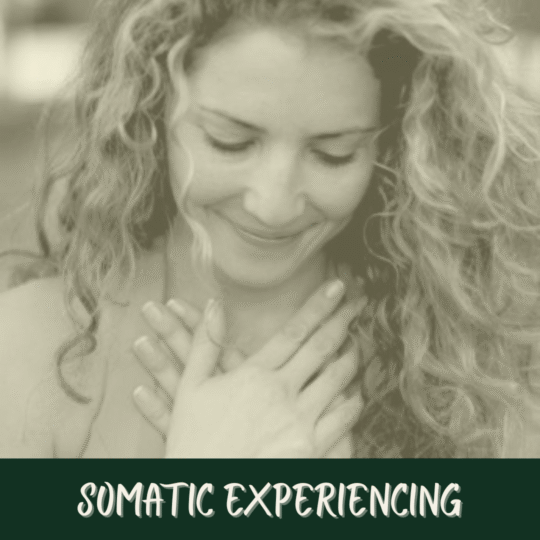
Somatic Experiencing |
|
When we talk about boundaries, we often think in terms of decisions, rules, or resolve. But many of the boundaries we struggle to hold aren’t cognitive at all, they’re physiological.
Somatic Experiencing is a body-based approach that helps us notice where we are already at capacity, where we’re overriding our own signals, and where “too much” is being stored in the nervous system rather than processed. Instead of pushing for change, it teaches us to slow down, sense what’s present, and respond from safety rather than pressure.
In a month where we’re often encouraged to do more, try harder, or become someone new, Somatic Experiencing reminds us that real breakthroughs begin with containment. When the body feels supported and resourced, clarity emerges naturally, and boundaries stop feeling like resistance and start feeling like self-trust.
If you’re curious about how your body might already be signalling what it needs, this modality offers a powerful place to begin.
|
|
|
| | |
|
In Tool Time, we highlight one practical tool designed to support your inner alignment and everyday well-being. Whether it's a downloadable guide, a journal prompt, or a boundary-building aid, each spotlight offers something tangible to help you take your transformation from theory into practice - one tool at a time. |
| | |
|
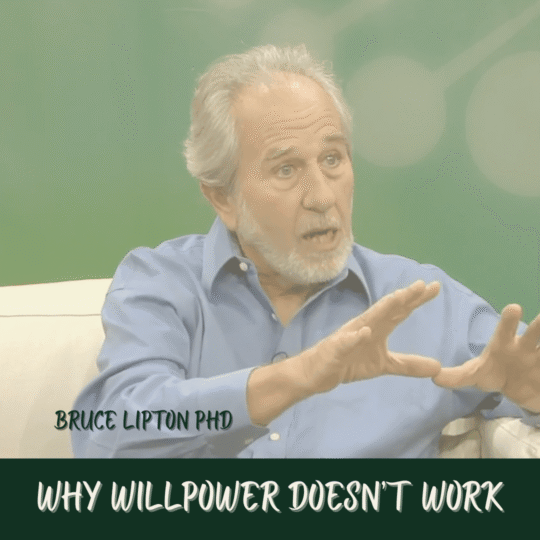
Why Willpower Doesn’t Work |
|
One of the biggest myths of January is that change requires more effort, more discipline, or more willpower. In this short talk, Bruce Lipton explains why that approach so often fails.
Drawing on epigenetics and the biology of belief, Lipton shows how our behaviour is driven less by conscious intention and more by our internal environment. When the body is under stress, overwhelmed, or operating in protection mode, change simply doesn’t stick. No matter how good the intention.
This is where boundaries come in. Boundaries don’t slow progress. They change the conditions in which change becomes possible. By reducing stress and creating a sense of safety, they allow the nervous system and the subconscious to move out of survival and into growth.
If you’ve ever wondered why you know what you want to do, but struggle to follow through, this is a powerful reframe worth adding to your Toolbelt.
|
|
|
| | |
|
In Product Pick, we spotlight a curated item from our store each week, featuring recommendations from our alchemists and insights on why this product could enhance your journey toward wellness and transformation. |
| | |
|
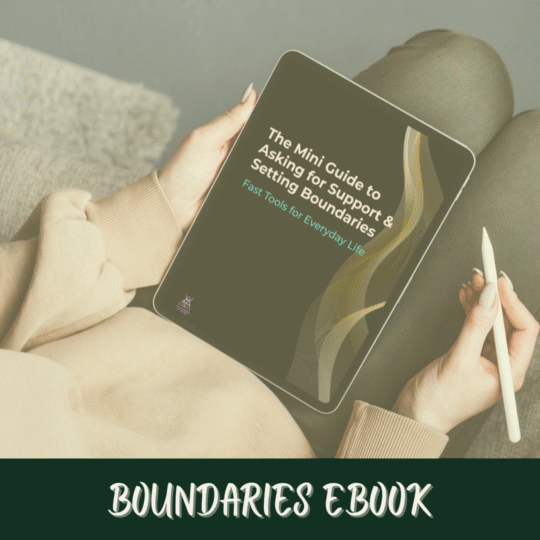
Boundaries Mini Guide |
|
If boundaries are where breakthroughs begin, then having something steady to return to can make all the difference.
Our Boundaries Mini Guide was created for moments exactly like this. Not when you want to overhaul your life, but when you want to get clearer on what you’re no longer willing to carry, tolerate, or override. It’s not about building walls or becoming rigid. It’s about learning how to listen to yourself earlier, respond more honestly, and protect your energy before it’s depleted.
January often encourages us to add more goals, habits, and expectations. This guide offers the opposite approach. It supports you to pause, reflect, and consciously define your edges, so any changes you make later in the year are grounded in self-respect rather than pressure.
If boundaries are something you’re actively exploring, this guide is designed to be a calm companion you can revisit as the year unfolds.
|
|
|
| | |
|
In Transformative Tales, we share stories of personal transformation - from our own experiences, our readers' journeys, and inspiring narratives from around the world. These stories aim to ignite hope, spark inspiration, and demonstrate the incredible potential for change that resides within each of us. |
| | |
 |
|
The Overloaded Traveller |
|
We’re often told that boundaries are the answer, and often they are. But not all boundaries are meant to be permanent. Some were created for survival, some for protection, and some for a version of us that no longer exists. This short story is one I’ve chosen because it reminds us that breakthroughs don’t just come from holding firmer edges, but from knowing what no longer needs to be carried, including the boundaries that have outlived their purpose.
|
|
|
| | |
|
There was once a traveller standing at the edge of a crossing. Beyond it lay open ground, new terrain, the promise of something different. The path ahead was clear, but the traveller was struggling to move.
They were carrying too much.
Bags hung from each shoulder. Pockets were stuffed. Some of what they carried had once been useful. Some had been added “just in case.” Others were things they’d picked up because everyone else seemed to be carrying them too.
The traveller tried to walk faster. When that didn’t work, they tightened their grip. They told themselves they just needed more strength, more determination, more effort.
Still, the crossing felt impossible.
Eventually, the traveller stopped. Not to push harder, but to look down. One by one, they set things on the ground. Not everything. Just the things that were weighing them down the most.
As the load lightened, something changed. Their breathing eased. Their footing steadied. The crossing no longer felt like a test of endurance, but a natural next step.
The traveller didn’t cross because they became stronger.
They crossed because they carried less.
Reflection
As you step into the year ahead, what are you still carrying that once protected you, but may no longer be needed? |
| |
|
If there’s one thing to carry forward from this edition, let it be this: clarity often begins with deciding what no longer gets access to you.
Access to your time.
Your energy.
Your attention.
Your nervous system.
And if you’re ever not sure, don’t forget the Practice Prompt. You already know, so just ask yourself…
If during reading this today, anything made you think of someone, please forward it to them. Trust your intuition. These ideas tend to land most powerfully when they’re shared person to person.
You’re also always welcome to reply to this email with any reflections or thoughts, whenever they arise. We genuinely enjoy hearing from you.
We’ll be back soon with a Moment of Meaning, sharing my latest ramblings on the topic of novelty and complexity within the wellness world. It’s a good one!!
Blessed Be,
Charlotte |
| | |
|
Check us out on our socials for more fab stuff |
| | |
|